I Wiped My Bedroom Windows Dry Every Morning for Two Weeks Before I Figured Out What Was Actually Wrong
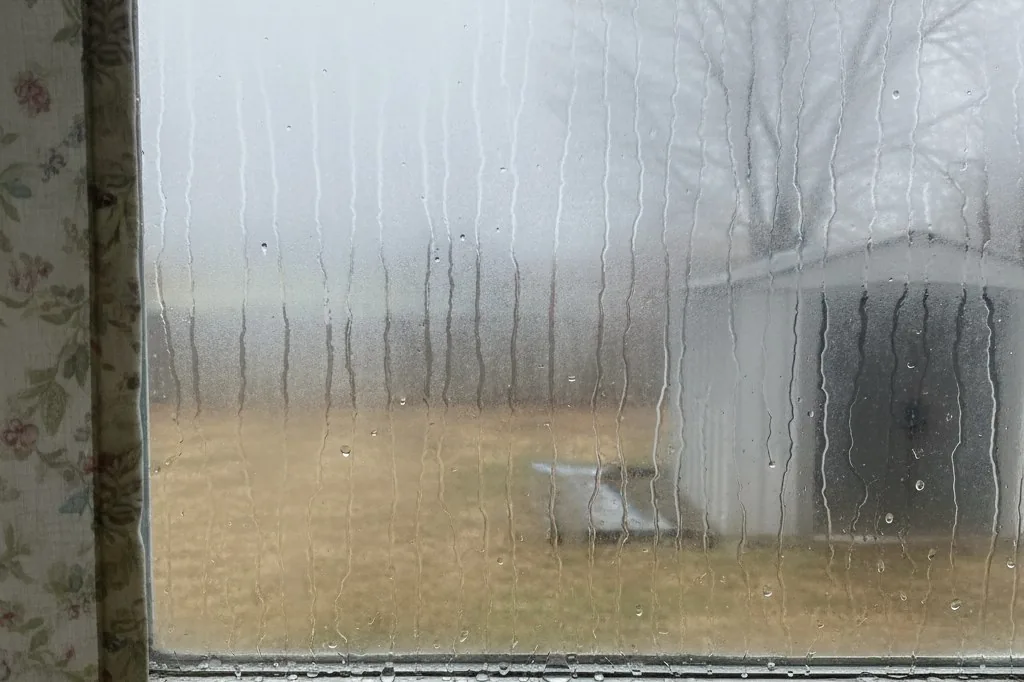
Where It Was Coming From
The first source was obvious once I thought about it: me. Or more accurately, us.
Two people breathing in a closed room for eight hours pump out more moisture than you’d think. Every exhaled breath is warm and humid, and with the door shut all night to keep the cat out, none of it was escaping. We’d been sealing ourselves into a small bedroom with no airflow, no exchange, just the same air circulating back on itself all night.
I did the math later. An adult exhales roughly half a cup of water vapor over the course of a night, sometimes more depending on temperature and how deeply you’re breathing. Two people, eight hours, no ventilation—that’s a cup of water being added to the air in a room that’s maybe twelve by fourteen feet. It doesn’t evaporate. It doesn’t disappear. It just stays there, hanging in the air, until it finds somewhere cold enough to condense.
The second source was hiding behind my nightstand.
I’d been watering a cluster of plants every few days—a pothos, a snake plant, and a peace lily, all in ceramic pots without drainage trays, sitting on a wooden plant stand shoved into the corner. Damp soil releases moisture constantly, especially when the room is warm and the heat’s running. It’s called evapotranspiration: water evaporates from the soil and also moves up through the plant and out through the leaves.
I moved the hygrometer next to them for an hour just to test it. The reading climbed from 68% to 71%. Three percentage points from three plants.
The third one I stumbled on by accident when I pulled back the bedspread to change the sheets.
I’d been using a cool-mist humidifier on my partner’s side of the bed for her winter dry skin. It ran on a timer, four hours every night, pointed directly at the wall—the same wall with the problem windows. It’s one of those small ultrasonic models, the kind that puts out a visible mist and holds maybe half a gallon of water.
Four hours a night. Half a gallon of water turned into vapor and pumped straight into the air. Right next to the coldest surface in the room.
I’d been fighting condensation while adding moisture to the air on purpose.
So what actually worked?