I Wiped My Bedroom Windows Dry Every Morning for Two Weeks Before I Figured Out What Was Actually Wrong
The Fix That Worked
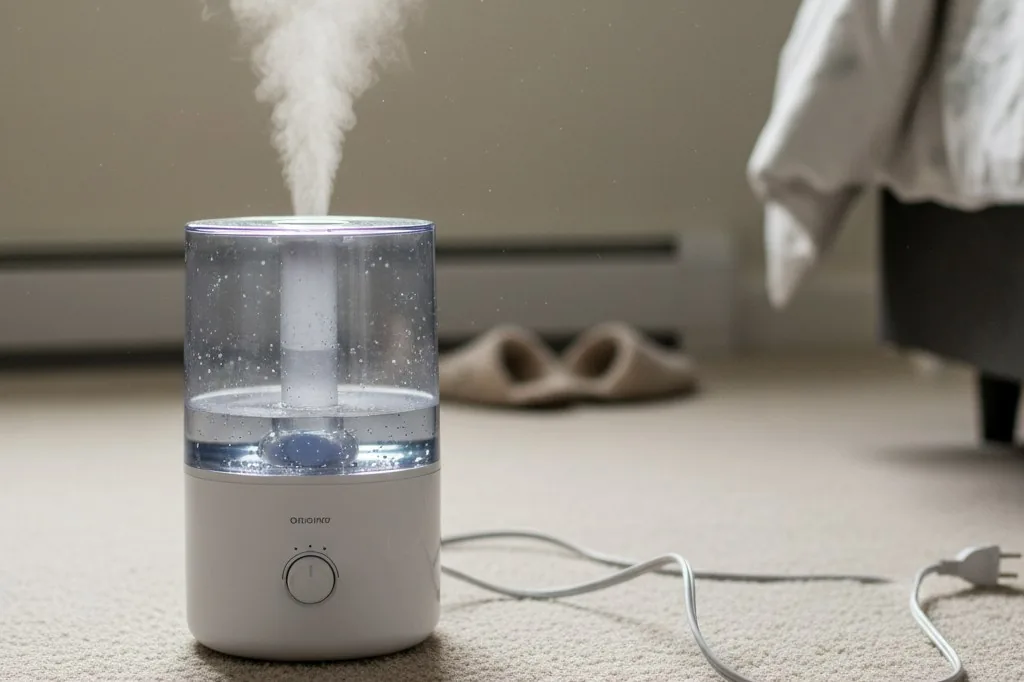
I unplugged the humidifier that same night and moved the plants to the living room windowsill, where they’d still get light but wouldn’t be adding moisture to an already overloaded bedroom.
The next morning, the windows were still wet—but noticeably less. Instead of water streaming down in rivulets, it was just a heavy layer of condensation I could wipe away with two paper towels instead of ten. By day three, the glass was completely dry.
That was enough on its own, but I wanted to keep the humidity stable long-term without having to think about it. So I grabbed a roll of weatherstripping tape from Lowe’s—the foam kind with adhesive backing, about $8 for a fifteen-foot roll—and sealed the tiny gaps around the bedroom door frame where I could feel a draft when I held my hand close. The door didn’t latch tightly, and air was leaking out into the hallway, which meant humid bedroom air was escaping and being replaced by drier air from the rest of the apartment. Sealing it helped, but it also meant I needed to add ventilation somewhere else.
Then I picked up a small tub of DampRid moisture absorber at the same trip, $6 for the starter kit. It’s just calcium chloride crystals in a vented plastic container—nothing fancy, but it pulls moisture out of the air and traps it in a bottom reservoir that you empty every few weeks. I tucked one container on the dresser and one in the closet, where the air tends to sit still.
I also started cracking the window open about two inches during the day whenever it wasn’t below freezing outside. Just ten or fifteen minutes of airflow in the afternoon made a measurable difference on the hygrometer. The reading dropped from 68% to around 52%, which is right in the normal range. You’re not trying to dry the room out completely—you just want to exchange some of that humid indoor air for fresh outdoor air, even if it’s cold.
Total cost: $26 if you count the hygrometer ($12), weatherstripping ($8), and DampRid ($6) together. Zero wet windows since. The sill stays dry. The paint stopped wrinkling. I don’t wake up to that cold, soggy mess anymore.
If your condensation comes back even after controlling moisture sources and improving airflow, that’s when you call someone. It might mean a ventilation problem in the walls, a roof leak, or failing window seals—all beyond DIY territory. If water’s getting in from outside rather than condensing from inside, you’ll see staining, rot, or dampness even when the room isn’t humid. That’s structural, and it needs a contractor.
But for me? It was just too much water and nowhere for it to go.