I Wiped My Bedroom Windows Dry Every Morning for Two Weeks Before I Figured Out What Was Actually Wrong
The Humidity Test
I needed to know if I was dealing with normal bedroom moisture or something else entirely.
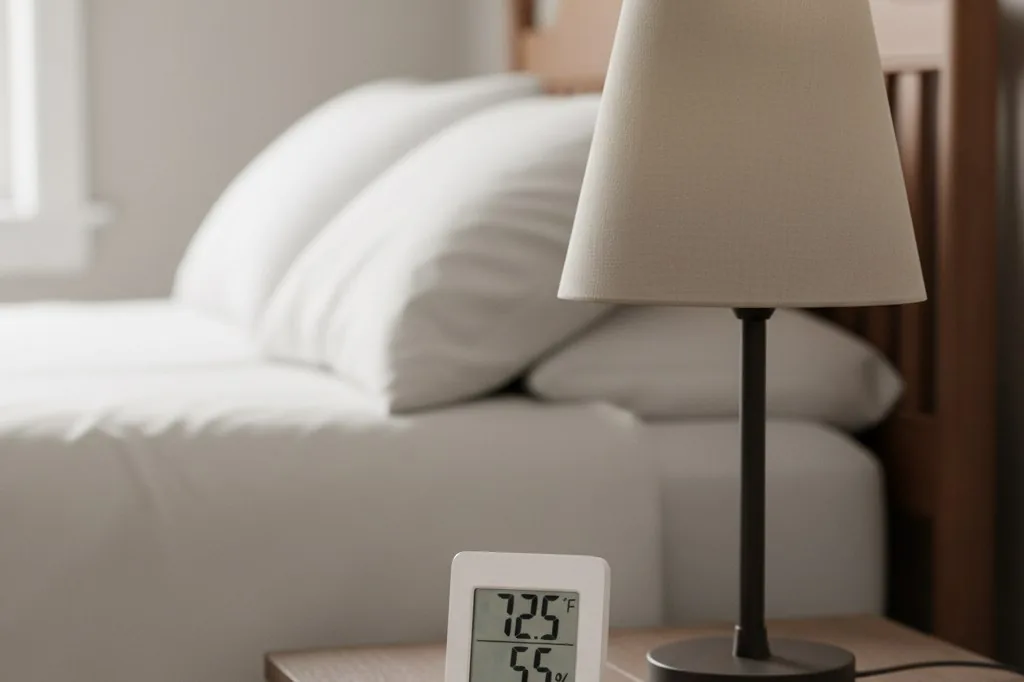
So I drove to Home Depot and grabbed a little digital hygrometer off the shelf—$12, about the size of a deck of cards, white plastic with a small LCD screen. It measures humidity as a percentage, and I had no idea what number to expect. The package said “ideal indoor humidity” was somewhere between 30% and 50%, which seemed like a pretty wide range.
I set it on my nightstand before bed, propped against the lamp base so I could see the screen in the morning.
The next morning, it read 68%.
I stared at it for a minute, then picked it up and carried it into the living room: 44%. I walked it into the kitchen and set it on the counter while I made coffee: 46%. Bathroom, even right after my shower with steam still hanging in the air: 51%.
I brought it back into the bedroom and set it down again: still 68%. It hadn’t budged.
That explained the condensation perfectly. When humid air hits cold window glass—and I mean truly cold, the kind of cold that comes through single-pane aluminum on a January morning—the moisture in the air condenses on contact. The temperature difference forces the water vapor to turn liquid. The more humid the room, the more water ends up pooling on the sill.
It’s the same reason a cold drink sweats on a summer day, just in reverse. The glass is the coldest surface in the room, so that’s where all the moisture goes.
But here’s what I still didn’t understand: why was my bedroom holding twenty points more humidity than the rest of the house? That’s not a small gap. That’s the difference between comfortable and basically tropical.
Something in that room was actively adding moisture to the air every single night, faster than it could escape. And once I started looking—really looking, not just wiping down the glass and moving on—I found not one source, but three.