The Same Fence Panel Blew Out Three Times Before I Found the Real Problem
What the Ground Was Doing
The soil five feet in either direction was dense Georgia clay—the kind that packs down like concrete when it dries and holds a post like a vise. You practically need a pickaxe to dig a new hole in it during summer. It’s a pain to work with, but it’s incredible for fence stability once everything’s set.
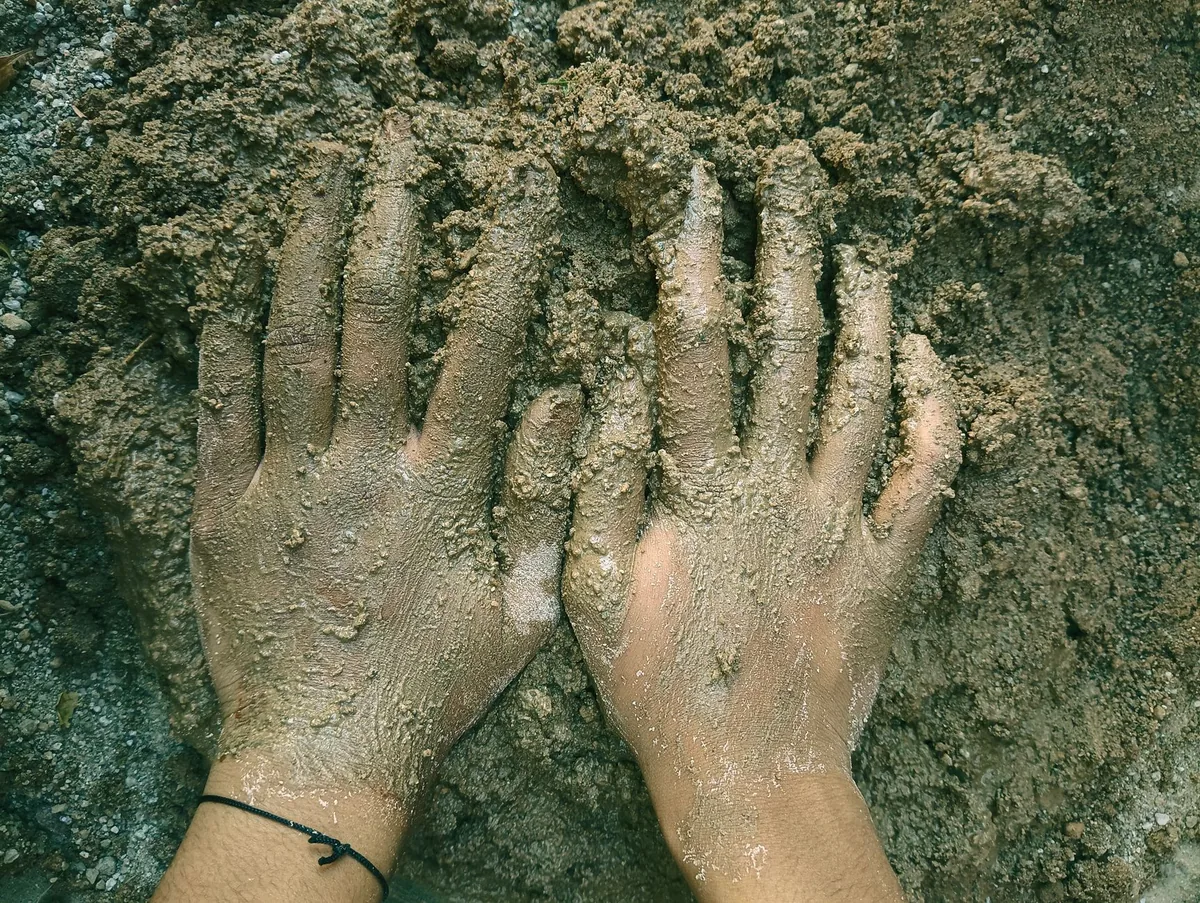
The dirt around this post was darker, softer, and full of organic matter. It crumbled in my hand instead of holding its shape. When I squeezed it, it fell apart like potting mix. There were even a few earthworms in it, which you almost never see in pure clay.
I dug out another six inches around the base, going wider this time to see how far the loose soil extended. Same thing. Loose, almost fluffy soil that had no business being there in a row of hard clay. It went out maybe two feet in a rough circle around the post, then transitioned back to the dense stuff.
Then I looked up at the yard behind the fence.
There’s a downspout from the garage roof that dumps right at the fence line, maybe three feet from this post. I’d never paid attention to it before because it wasn’t my garage—it’s on the neighbor’s side, and the fence sits right on the property line. But every time it rained, all that runoff soaked into the ground right here—and only here. We’re talking about half the roof of a two-car garage, probably four hundred square feet of shingles, all draining to one spot.
The water was breaking down the clay, turning it into something closer to potting soil. Over months and years, it had essentially composted the dirt. The organic matter I was seeing was probably grass clippings, leaf litter, and whatever else had washed down and decomposed in that constantly-wet zone. When the wind hit that panel—and it’s an eight-foot-tall solid panel, so it catches wind like a sail—the post had nothing to push against. The ground was basically mush.
I finally understood why the post kept failing. The wind load was fine. The post was fine. The footer was fine. But the soil holding that footer in place had been undermined by gallons and gallons of water, storm after storm, year after year.
But the fix wasn’t what I expected—and it didn’t involve digging a deeper hole.