The Same Fence Panel Blew Out Three Times Before I Found the Real Problem
How I Actually Fixed It
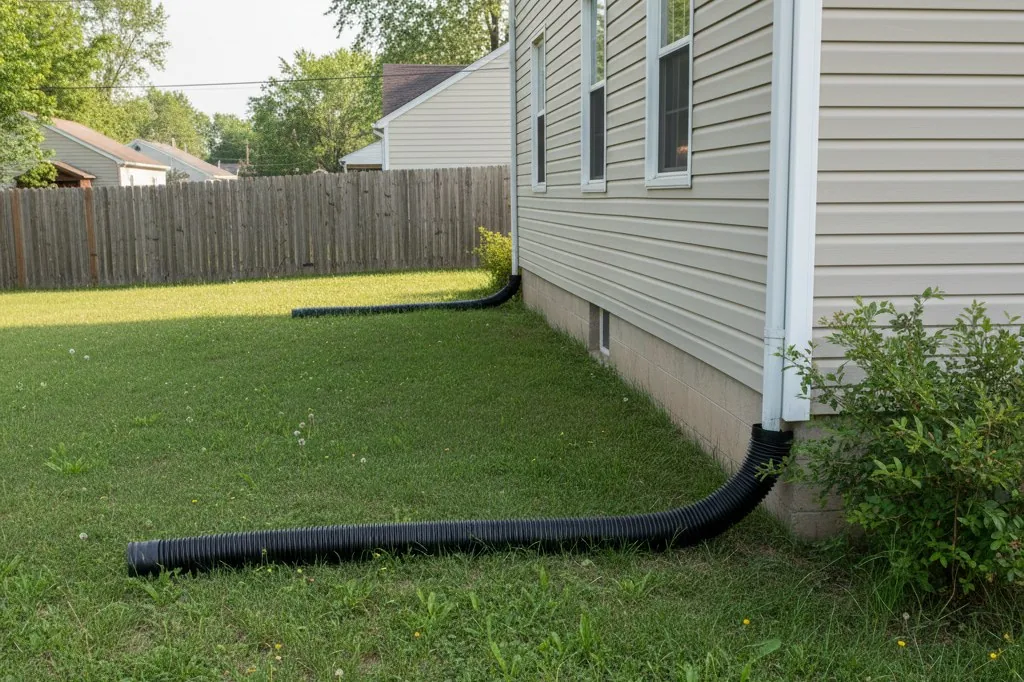
I rerouted the downspout first. Picked up a 10-foot flexible extension at Home Depot for $12 and ran it out into the yard, away from the fence line. It’s one of those corrugated black poly tubes that you can bend around obstacles. I secured it with a couple of downspout straps and aimed it toward the middle of the lawn where the water could spread out and soak in without concentrating in one spot.
Then I gave the ground three weeks to dry out completely. I didn’t touch the post. We had decent weather that stretch—warm, breezy, no rain—and I wanted the soil to firm back up on its own. I checked it every few days by digging down with a trowel, and I could feel the clay starting to bind again as the moisture left. By the end of week three, it was back to that dense, stubborn texture I was used to.
Once the soil firmed back up, I reset the panel and added two diagonal braces—just simple 2x4s cut at 45 degrees and lag-bolted from the post to the fence rails. I cut them at about thirty inches long so they’d reach from the post to the bottom rail without interfering with the middle one. Cost another $8 in lumber and hardware from Lowe’s. I used 3-inch galvanized lag bolts with washers, predrill the holes so the wood wouldn’t split, and snugged them down with a socket wrench.
The braces do two things. They distribute the wind load across more of the fence structure instead of concentrating it all at the post-to-rail connection, and they give the post something to push against even if the soil ever gets soft again. It’s basically an insurance policy.
That panel has been up for two years now through some serious windstorms. We had a line of thunderstorms last spring with gusts the weather service clocked at fifty-five miles per hour, and everything stayed put. The ground stays firm, the post has something solid to anchor into, and the braces do their job.
If your situation involves a retaining wall, a slope that’s actively eroding, or water pooling from a neighbor’s property that you can’t reroute, call a landscaper or drainage contractor. You might need a French drain, grading work, or an easement conversation that’s better handled professionally. Same goes if you’re seeing foundation issues, cracked slabs, or water getting into a crawlspace. That’s beyond fence repair.
But if it’s just a downspout or a gutter overflow? Fix the water first, let the ground recover, and save yourself the hole-digging. You’ll spend fifteen dollars and get a permanent fix instead of fighting the same failure every few months.