The Single Creaky Floorboard That Only Got Worse When I Ignored It

The Right Shim
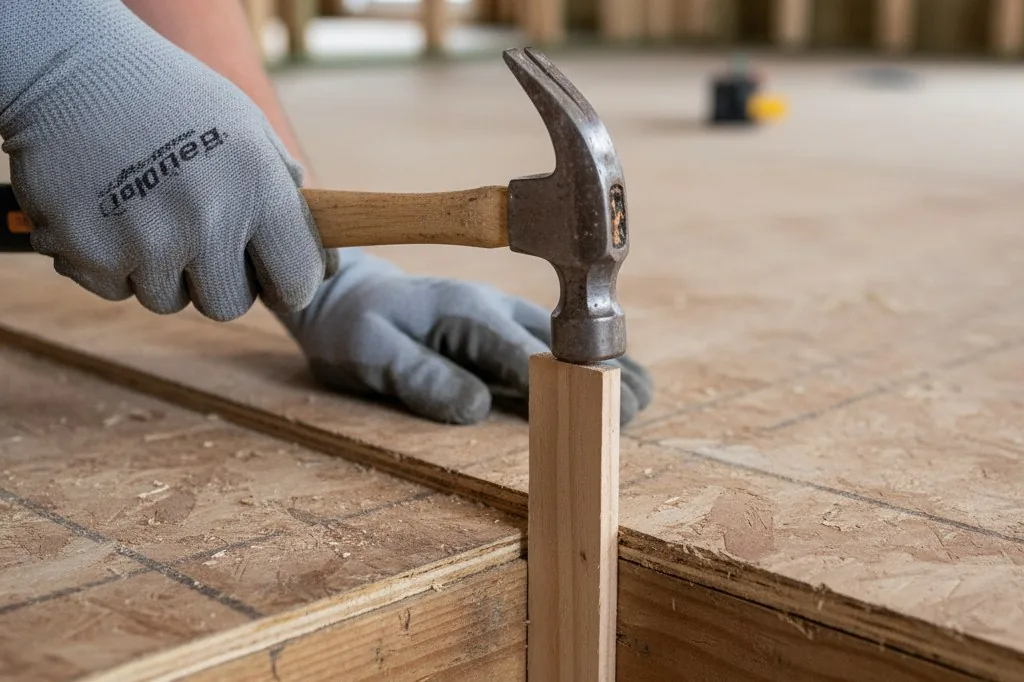
I grabbed a handful of cedar shims from the garage—the tapered wedge kind you buy in a bundle at Lowe’s for leveling cabinets and door jambs—and tapped one into the gap with a hammer until it felt snug.
I worked it in gently, checking the resistance every few taps. When it stopped moving and felt solid, I scored it with a utility knife and snapped off the part sticking out past the joist. Then I replaced the floorboard, walked over the spot a dozen times, and heard nothing.
Perfect. Problem solved. I put my tools away feeling like I’d just saved myself a service call.
For about a week, it worked perfectly. Then one morning, there it was again: the same soft groan under my heel, maybe not quite as loud but definitely back.
I pulled up the board to check. The shim was still there, but it had compressed just enough to let the gap reopen. Not by much—maybe an eighth of an inch—but that was all it took. The plywood was flexing again.
Wood on wood, even when it’s driven tight, can settle and shrink over time—especially if there’s any flex or moisture involved. The joist was old and dry. The shim was new cedar. They don’t move at the same rate, and under repeated load that little wedge just gave up.
I tried doubling up the shims. Same result, just took a little longer.
That’s when I called a finish carpenter I’d used before on a bathroom remodel. I explained what I was dealing with, and he laughed—not in a mean way, but in that knowing way that says he’s seen this exact mistake a hundred times.
He told me what he actually uses on jobsites when a floor squeaks during the final walkthrough and the client’s about to show up.
It wasn’t wood. It wasn’t a wedge. And it cost me less than eight dollars at Home Depot.
The difference? This material doesn’t compress, doesn’t shrink, and fills irregular gaps better than any shim I could carve by hand. It bonds instead of wedging, and that turns out to matter.