The Single Creaky Floorboard That Only Got Worse When I Ignored It
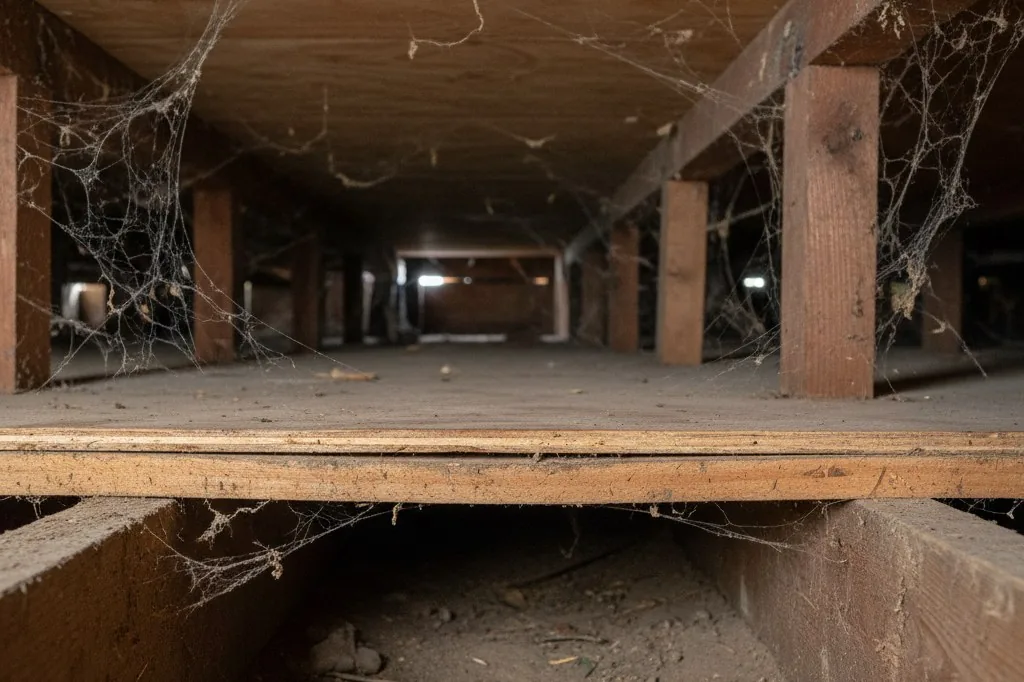

What I Found Below
The subfloor—the plywood layer nailed to the joists—was supposed to sit flush against the wood framing below. That’s how you get a solid, silent floor. Plywood on joist, no daylight between them, everything bearing weight evenly.
Mine didn’t. There was a quarter-inch gap between the underside of the plywood subfloor and the top edge of the joist, right where my foot landed every morning.
Every time I stepped there, the board flexed down, rubbed against the joist edge, and made that telltale creak. Then it sprang back up when I moved on. The finish floorboard on top was fine—it was nailed down solid. But it was nailed to a subfloor that had nothing underneath it, so the whole sandwich flexed as one piece.
It’s one of those things that happens during construction more often than you’d think. Maybe the joist had a twist in it and nobody shimmed it level before the subfloor went down. Maybe the framing lumber was still green and crowned a bit after it dried out. Maybe the subfloor sheet just landed on a high spot at the edges and left the middle floating.
Either way, you end up with a void that turns into noise.
I stuck my hand up into the gap and pressed on the plywood from below. Sure enough, I could feel it flex a quarter-inch down until it hit the joist, then bounce back. That little bit of travel was all it took.
The fix seemed straightforward: fill the gap so the board can’t move. Shim it tight, the way you’d shim a wobbly table leg. Simple enough, right?
Except I had no idea what to fill it with. I had a dozen ideas and no clue which one would actually hold. And as I’d learn pretty quickly, that choice makes all the difference between a repair that lasts and one that fails in a week.