My Dryer Ran Three Times Per Load Until I Found the Real Problem
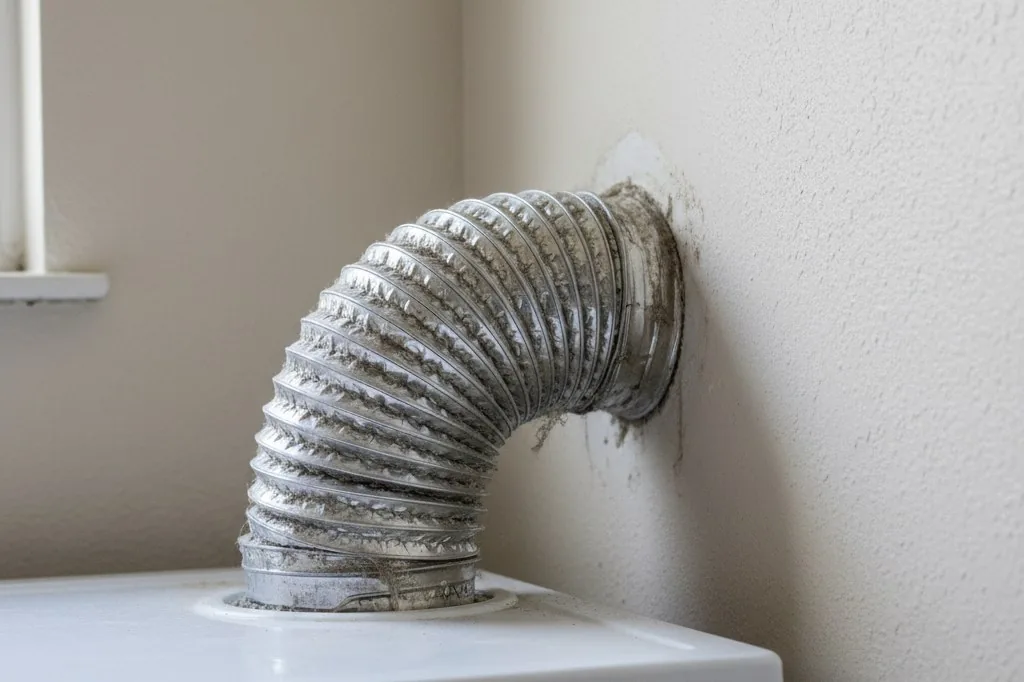
The Vent Nobody Checks
Behind your dryer, there’s a four-inch duct—usually aluminum flex or rigid metal—that carries all that hot, wet air outside. You’ve probably seen it, maybe nudged it when you installed the machine or swept behind it once. If you’ve lived in your house a few years and never touched it, there’s a decent chance it’s doing its job just fine.
But that duct is the highway. And just like any highway, it has exits, bends, and bottlenecks where traffic slows down.
When lint settles in there, especially at the elbows or where the duct sags between wall studs, airflow chokes. Your dryer keeps heating, keeps tumbling, but all that moisture has nowhere to go. It just recirculates. The air inside the drum gets warm, sure, but it’s already saturated. You’re running a very expensive clothes tumbler that barely dries anything.
I pulled my dryer out—slid it forward about three feet, which was harder than it sounds because I had to disconnect the power and wiggle it past the washer—and disconnected the duct from the back. It was clogged, sure. Enough lint in the bends to slow things down. I pulled out a clump about the size of a softball from the elbow joint closest to the dryer.
I vacuumed the duct. I felt pretty good about it. I thought I’d solved the problem.
But then I looked closer, at the spot where the duct connects to the dryer itself. There’s a metal collar on the back of the machine, and the flexible duct clamps onto it with a metal ring or foil tape. That connection point looked clean.
It was the section just inside that collar that made me stop.
There’s a transition piece between the lint trap housing and the external duct—a short internal duct, sometimes plastic, sometimes metal, depending on the model—that most people never inspect. Even when they vacuum out the vent line, even when they pull the duct off to check it, they stop at the exterior connection.
I shone my flashlight into that opening.
What I found in that hidden transition piece explained everything.