My Dryer Ran Three Times Per Load Until I Found the Real Problem
Where Heat Actually Goes
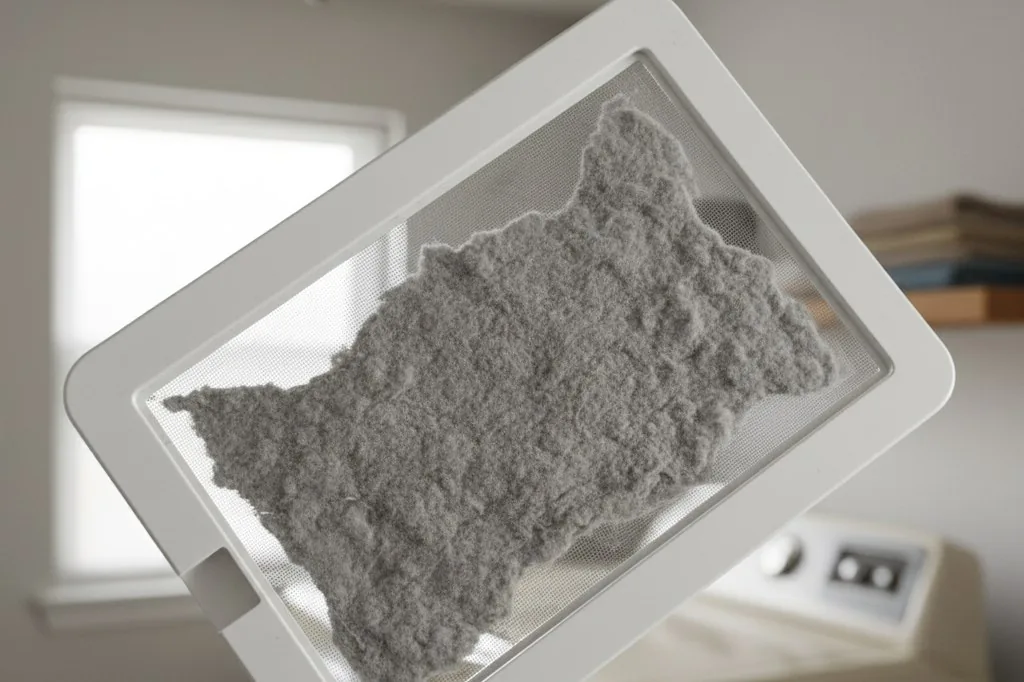
You pull the lint screen, you clean it, you slide it back. That’s what everyone does. And for surface lint—the stuff that peels off in a satisfying felt sheet—it works just fine.
But your dryer doesn’t just push air through that screen and call it a day.
The air keeps moving. After it tumbles through your clothes and passes the lint trap, it gets sucked into a pathway you probably can’t see without a flashlight and some contortion. That path runs from the drum, through a transition duct inside the machine, past a blower fan, and eventually out to wherever your vent exhausts—usually a four-inch hole in an exterior wall or the roof.
Every inch of that journey is a place where lint can settle.
The stuff that makes it past the screen is finer—more like dust than fuzz. It doesn’t clump into something you can peel away. It cakes. It builds up slowly, layer by layer, in the seams and bends where airflow slows down. It’s especially bad if you dry a lot of towels, fleece, or anything cotton. Those fabrics shed more than synthetics, and that fine dust works its way into every corner of the system.
I didn’t know that. I thought the lint trap was the whole system. I thought if I cleaned that screen religiously, I was doing everything right. Turns out I’d been maintaining about twenty percent of the problem.
The trap is just the first line of defense. And when the second line clogs up, your dryer works twice as hard and dries half as much. The heating element is fine. The thermostat is fine. The machine is doing exactly what it’s supposed to do—it’s just trying to push air through a tunnel that’s half-closed.
It’s like breathing through a straw. Technically possible. Wildly inefficient.
So where was my clog hiding?
I grabbed a flashlight, pulled the lint trap all the way out, and shone the beam down into the cavity where it sits. I could see the metal duct below it, and just past that, a turn where the air gets pulled sideways toward the blower.
That turn looked darker than it should have.
But that still wasn’t the worst of it.