I Cleared My Gutters Twice in One Month – Then I Looked Up
The Hidden Bottleneck
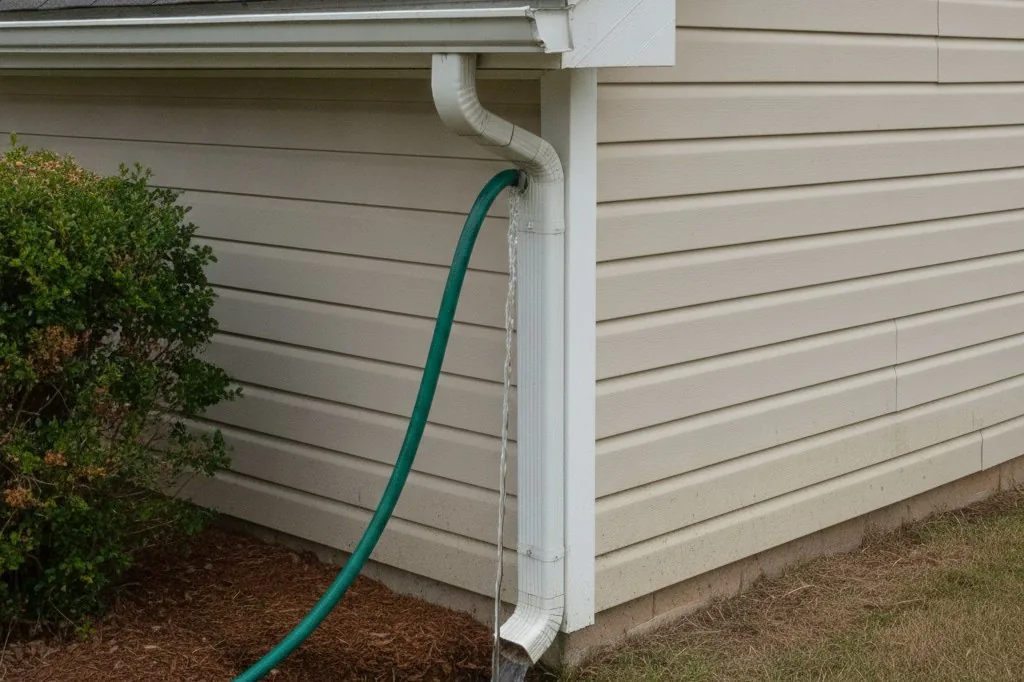
I grabbed the garden hose and shoved it down into the top opening, then turned it on full blast. The nozzle wouldn’t fit through the rectangular hole, so I just fed the bare hose end in and let it run.
For about thirty seconds, nothing happened. The water just pooled at the top, swirling around the mouth of the downspout like a slow drain in a sink. I could hear it trickling, but not flowing—the kind of sound that tells you it’s finding a path, but barely.
Then I heard a gurgling sound, followed by a sudden whoosh. Water came gushing out the bottom elbow at ground level, brown and full of debris—along with what looked like half a season’s worth of shingle grit, seed pods, and a clump of something black and fibrous I didn’t want to identify.
The downspout had been almost completely blocked about three feet down. From the outside, you’d never know. No bulge, no separation at the seams, nothing visible at all. Just a straight vertical tube that looked like it was doing its job.
Most downspouts have at least one elbow joint where they angle away from the house at the bottom. In my case, that’s exactly where the blockage had formed—right at the bend where debris naturally catches and packs tight. Gravity pulls everything down, but the turn forces it to change direction, and that’s where it jams.
A garden hose works if the clog is fresh and loose. Mine wasn’t, and the water pressure from a standard hose—maybe 40 or 50 psi on a good day—barely made a dent until gravity and luck finally broke it free. I stood there for three or four minutes just holding the hose in place, waiting, before anything moved.
What do you do when water alone won’t cut it? When you’ve got a clog that’s been sitting there since October, compressed and hardened, and your hose pressure isn’t enough to push it through?