Three Heating Contractors Missed the Draft — A Candle Found It in Four Minutes
The test itself
You need a candle or a stick of incense, and a windy day. That is the whole equipment list.
Close every window and external door. Turn off any exhaust fans in the kitchen and bathrooms, and if you have a whole-house ventilation system, shut that down too. You want the house still, so the only air moving is air that is getting in on its own. The wind outside creates pressure on one side of the building and suction on the other, and that difference pulls air through any gap that goes all the way through.
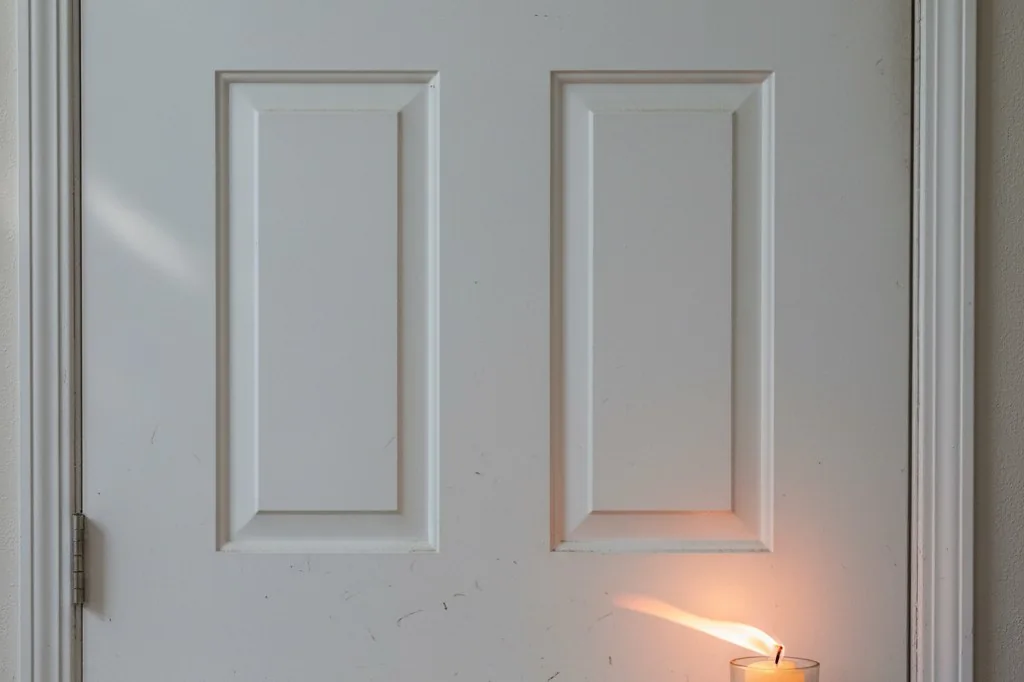
Light the candle and hold it about four inches from the surface you are testing, moving it slowly — slower than feels necessary, roughly the pace of a second hand on a clock. Watch the flame rather than the wick. Where the flame leans consistently in one direction, air is moving through. A flicker is just turbulence in the room; a steady lean is a hole.
Mark every spot with a strip of low-tack painter’s tape as you find it. Do not stop to fix anything yet. The point of the exercise is a map, and people who fix as they go almost always stop after the first one and miss the larger gap six feet further along. I did this myself the first time: found a draft at the window sash, spent twenty minutes sealing it, felt pleased, and quit. My father-in-law came back through an hour later and found four more spots I had never gotten to.
Work the whole perimeter of each room at three heights: baseboard level, where the wall meets the floor; handle height, roughly three feet up where window and door hardware sits; and above the frame, where the top casing meets the wall. Those three lines will catch sill gaps, sash gaps, and the frame-to-wall joint that almost everybody misses.
The candle will gutter and go out in a strong draft. That is useful information. Relight it, mark the spot with tape, and keep going. When you have worked every external wall, step back and look at the pattern. Isolated marks are usually worn weatherstripping or a settled sash. A vertical line of three or four marks, all at the same horizontal distance from the corner, is almost always the frame-to-wall joint behind the trim, and that is the one that will cut your heating bill in half.