My Garage Door Jammed the Morning the Temperature Dropped — Here's the One Thing I Wish I'd Known
The Quick Fix
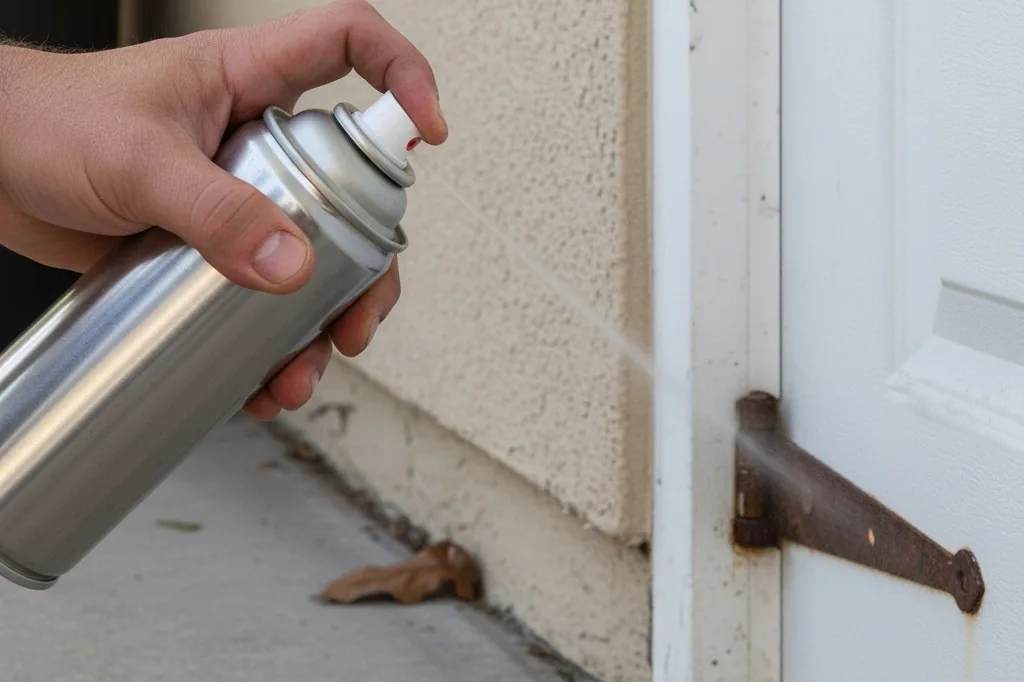
I grabbed a can of silicone spray lubricant from Home Depot the next morning — ran me around eight bucks for an eleven-ounce can. Lowe’s and Ace carry similar options in the same price range. Look for something rated to -40°F or lower, usually in the automotive aisle or near the garage-door hardware.
You want silicone spray or a synthetic blend specifically designed for cold weather, not petroleum-based grease or lithium grease. The difference matters. Silicone stays liquid at temperatures where grease turns into a solid. The can will say “cold weather” or “low temperature” right on the label, and it’ll list a minimum operating temperature somewhere on the back. If it doesn’t list a temp rating, don’t buy it.
Disconnect the opener first. There’s usually a red pull handle hanging from the trolley rail, attached to a cord. Pull it straight down and the door disengages from the motor. That lets you move the door by hand without the motor fighting you or the safety sensor cutting power. If your release handle won’t pull — like mine didn’t at first — wait for a warmer day or use a space heater to warm the garage up above freezing before you start.
Open the door halfway, either by hand or with the opener if it’s working at the moment. Halfway gives you easy access to every roller on both sides without bending down or reaching overhead. You’ll be working on thirteen to fifteen rollers per side on a standard two-car door, so positioning matters.
Wipe each roller stem clean with a shop rag or paper towel. You’re removing the old grease that caused the problem, and you want bare metal before you apply the new lubricant. Don’t skip this step. Spraying new silicone over old lithium grease just traps the problem under a thin layer of solution.
Once the stem is clean, give it two quick sprays from about six inches away. You’re coating the metal pin itself, not the plastic or steel wheel that rolls along the track. The spray will run down the stem and work its way into the bracket where the pin pivots. That’s what you want. Let any excess drip off.
Hit both sides of the door — typically twelve to fifteen rollers per side, so twenty-six to thirty total. Then spray the hinges where each panel connects and pivots. A single spray per hinge is enough. If you can safely reach the bearing plates at the ends of the torsion spring — the round metal plates where the spring shaft sits — give those a spray too. Do not touch the spring itself, and do not try to adjust anything on the spring mechanism.
Reconnect the opener by pulling the release handle toward the door until it clicks back into the trolley. Test the door. It should move smoothly, quietly, and without any hesitation from the motor.
Total time: ten minutes. Total cost: under twelve bucks, and the can will last you three or four more applications over the next few years.
When to stop and call someone: If the door is visibly off its track, if a spring looks damaged, broken, or hanging loose, or if you hear grinding or scraping that doesn’t go away after lubrication, stop and call a garage-door technician. Torsion springs are under several hundred pounds of tension, and they can cause serious injury or death if they snap or come loose while you’re working near them. If the door won’t stay in place when you lift it halfway by hand, the spring tension is wrong, and that’s also a professional repair. This fix works for lubrication problems in cold weather. It doesn’t fix broken parts, and it won’t make up for a door that’s out of balance or a spring that’s lost tension.