My Garage Door Jammed the Morning the Temperature Dropped — Here's the One Thing I Wish I'd Known
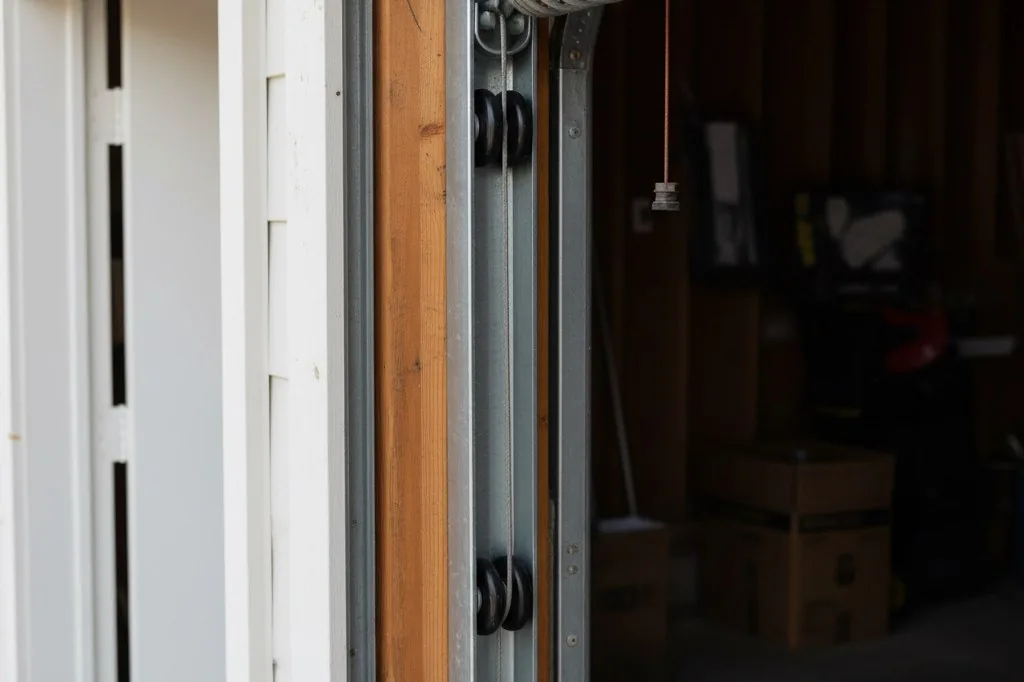
The Metal Contracts
Cold does predictable things to metal. Steel tracks contract slightly when the temperature drops. Coil springs tighten up. Rollers shrink by a fraction of a millimeter. Every moving part shifts just a little bit, and on a system as tightly calibrated as a garage door, a little bit can be enough.
I thought that was the problem. Every forum post I read pointed to springs losing tension in the cold, or tracks warping just enough to bind the wheels. One guy swore his door wouldn’t open below 25°F because the metal contracted and threw the whole alignment off. Another said his torsion spring snapped during a cold snap and left the door hanging crooked.
But my springs looked fine — no gaps in the coils, no sagging on one side, no visible rust or wear. I measured the gap between coils with a tape measure, comparing one side to the other. Even. The tracks were straight when I held a level against them. The rollers turned freely when I spun them by hand, and none of them were cracked or chipped.
I pulled up the weather history on my phone. We’d hit 19°F overnight, but it had been in the mid-twenties plenty of times in previous winters, and the door had always worked. So why now?
The real issue wasn’t the metal itself. It was what sits between the metal parts.
Every garage door has about a dozen points where one piece of steel slides, rolls, or pivots against another. The hinges where each panel connects. The roller stems inside their brackets. The shaft bearings at either end of the torsion spring. The chain or belt mechanism inside the opener itself if you have a rail-mounted system.
Each of those contact points needs lubrication to move smoothly under load. A two-car garage door typically weighs between 150 and 200 pounds. All that weight is rolling, pivoting, and sliding on a handful of small metal surfaces, dozens of times a day, for years on end.
And I’d lubricated everything back in April, just like you’re supposed to. I’d gone panel by panel with a spray can, hitting every hinge and roller stem, wiping off the excess. The door had been whisper-quiet ever since. Smooth as it had ever been.
That’s exactly what caused the problem.
Because the stuff I’d sprayed on in spring weather was now doing the opposite of its job — and it was doing it in one very specific place that I wouldn’t have thought to check first.