I Fed My Compost Pile for Two Years and It Never Broke Down

The Temperature Test
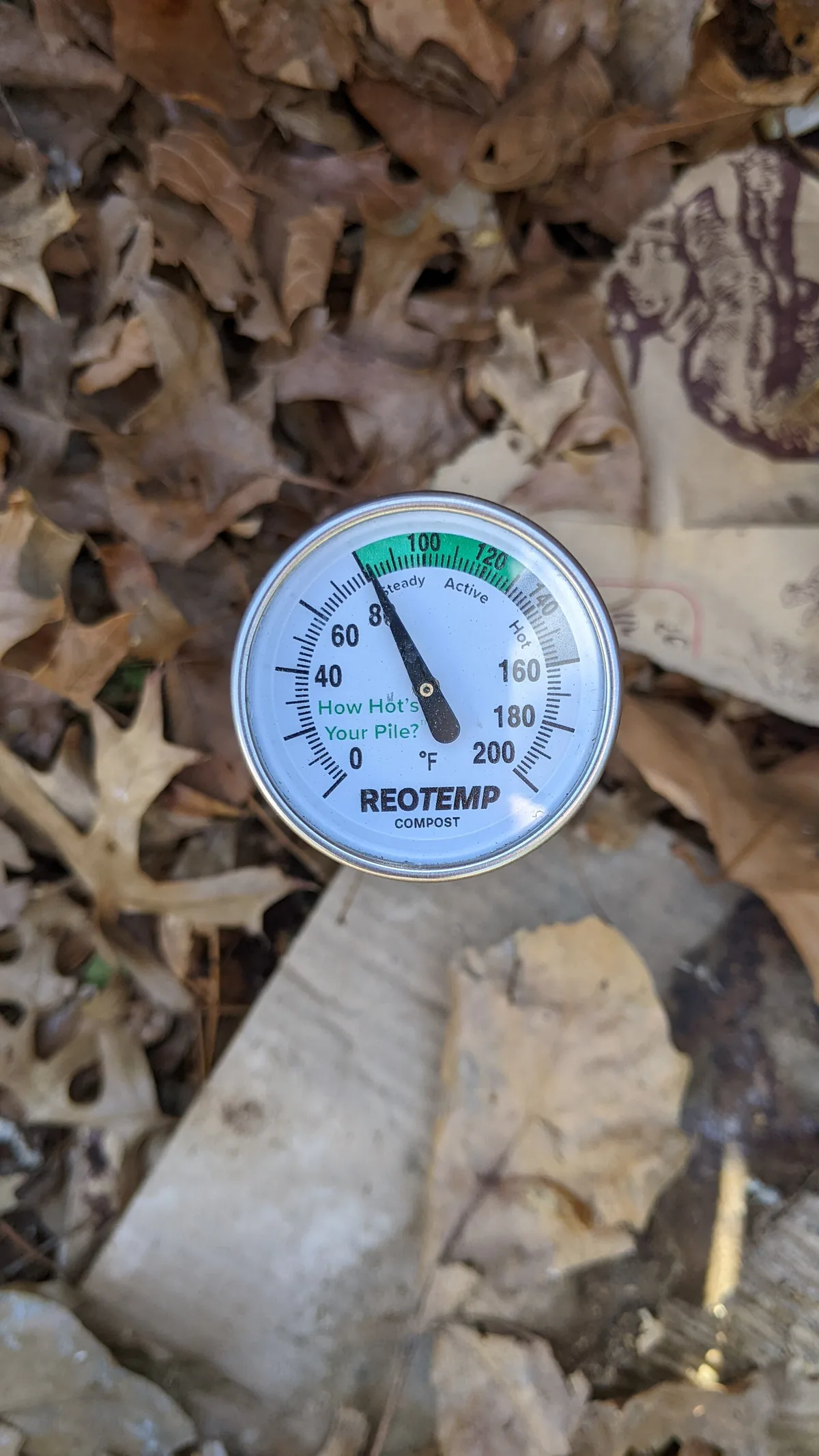
I ordered a 20-inch compost thermometer from Amazon for $15. It had a dial face at the top and a long stainless steel probe, the kind you see in photos of serious composters standing next to their steaming piles in winter. It arrived two days later, and I shoved it straight into the center of the pile—about eighteen inches deep, right where all the microbial activity is supposed to be happening.
The reading? 68°F.
That’s basically room temperature. The same as the air around me. I pulled it out, waited an hour, tried again in a different spot closer to the side. Same thing. Low seventies at best, and that was on a warm afternoon in September.
A healthy, working compost pile should hit between 130°F and 160°F in its core. Some piles, if they’re big enough and balanced right, will spike even higher—up to 170°F or 180°F for a few days. That heat comes from billions of aerobic microbes breaking down organic matter, respiring and multiplying so fast they generate serious thermal energy. It’s what kills weed seeds, speeds up decomposition, breaks down pathogens, and turns garbage into black gold.
Mine wasn’t even breaking a sweat.
I stuck my hand into the pile, not all the way to the bottom, just a few inches down through the top layer. It was cool to the touch. Not cold, but cool. Like the inside of a closet. There was no warmth, no sense of life, no indication that anything was happening in there at all.
So the thermometer told me exactly what was wrong: my pile was biologically inactive. The microbes that should have been feasting and multiplying and generating all that heat simply weren’t doing their job. Or they were dead. Or they’d never colonized the pile in the first place.
But it didn’t tell me why. I had plenty of material—two years’ worth, in fact. I had air circulation from the ventilation slats. I had moisture, maybe too much, actually, because the bottom was always damp when I dug down. Sometimes I’d pull out a forkful and water would literally drip off it.
What was stopping the microbes from getting to work?