I Fed My Compost Pile for Two Years and It Never Broke Down
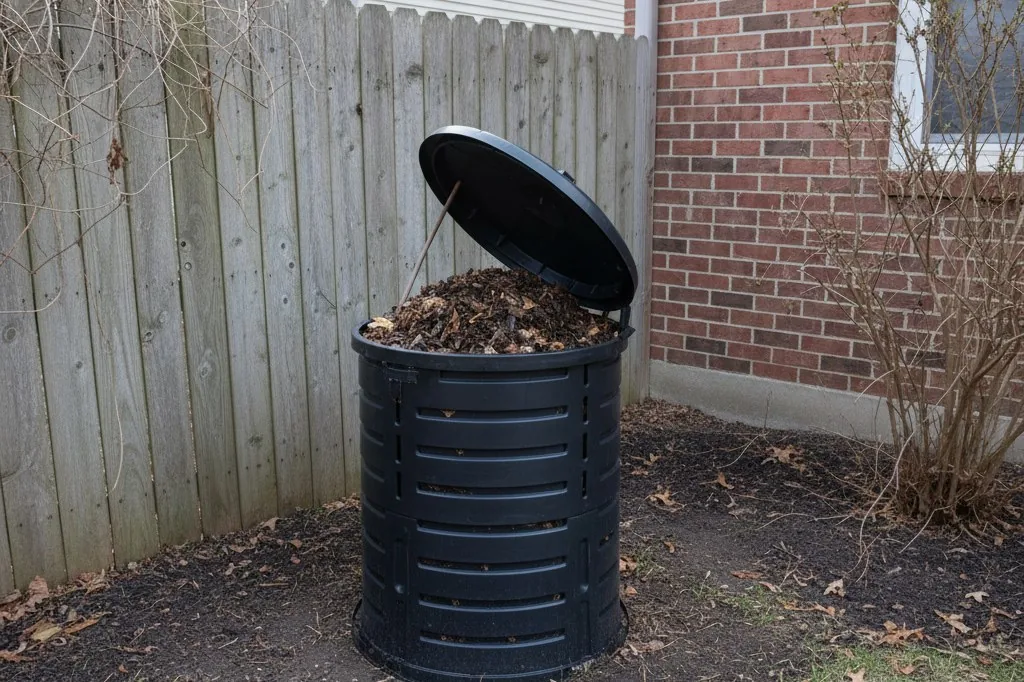
I started my compost pile in the spring of 2022 with good intentions and a bin I picked up at Home Depot for thirty dollars. It was black plastic, about 28 inches on each side, with ventilation slats molded into the walls and a lid that lifted off for access. The kind of thing that’s supposed to make composting foolproof.
Every week I added kitchen scraps—coffee grounds, vegetable peelings, eggshells, the usual stuff. By the fall I’d thrown in a few bags of leaves I’d raked up from the yard. I turned it every few weeks with a pitchfork, just like the instructions said. I even added water when it looked dry, because I’d read that compost needs moisture.
Two years later, I could still recognize individual banana peels.
The pile just sat there. When I dug into it with a pitchfork, I’d find intact onion skins from months ago, coffee filters that looked brand new, and leaves that hadn’t broken down into that dark, earthy compost everyone talks about. They were still brown and crispy, like they’d just fallen off the tree.
Nothing was rotting. Nothing was heating up. The whole bin was a cold, layered museum of everything I’d tossed in, preserved in some kind of suspended animation.
I wasn’t doing anything obviously wrong—at least not that I could see. The bin had ventilation holes. I turned it every few weeks, sometimes more often when I remembered. I kept adding material in what I thought was a reasonable mix of green and brown. I checked it regularly, lifted the lid, poked around with a stick.
But something fundamental was missing from the equation. The question was what.
My neighbor had a pile that looked like mine from the outside—same bin, even—but when he dug into his, he pulled out handfuls of dark, crumbly compost that smelled like the forest floor after rain. Mine smelled like wet cardboard and old vegetables. Not rotten, exactly. Just stale.
It took a simple thermometer to point me toward the answer, and what I found surprised me more than I expected.