My Bedroom Door Stuck Every June — Until I Found the Real Culprit
Finding the Tight Spot
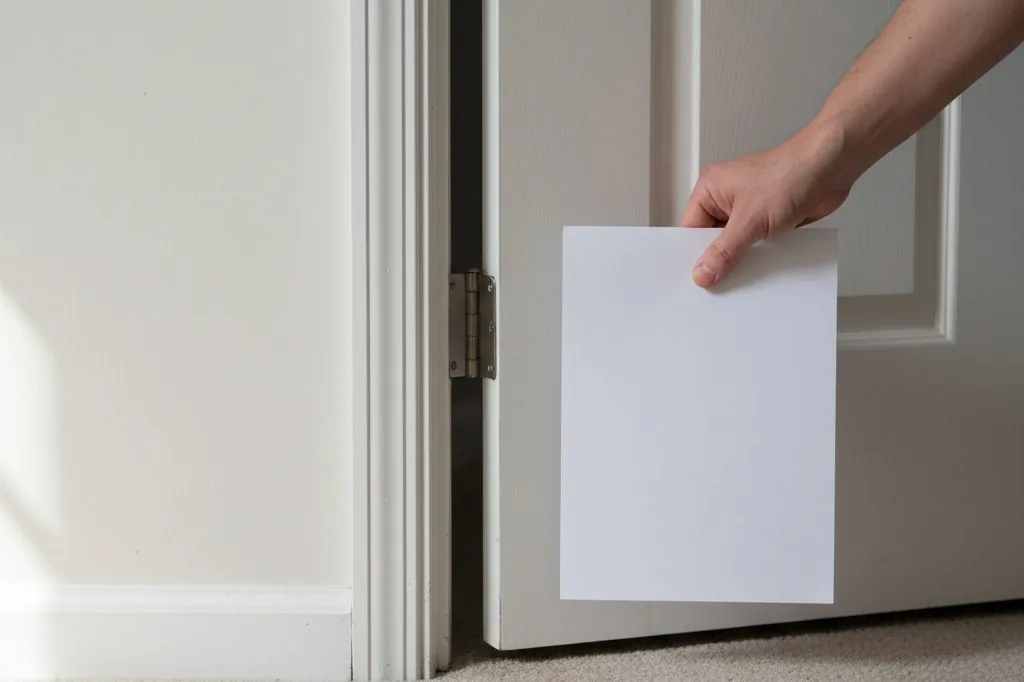
I grabbed a piece of printer paper — the cheap stuff, nothing fancy — and closed the door most of the way, just shy of the point where it would latch.
Then I slid the paper between the door and the frame, starting at the bottom on the hinge side. It moved freely, with just a whisper of resistance. I worked my way up the hinge edge, checking every few inches. Still smooth. Around the top edge, checking every few inches again. No problem.
Then I started down the latch side, and the paper stopped cold.
It was about two inches down from the top corner, right where I’d seen that burnished spot on the frame. I could barely pull the paper through. It didn’t tear, but I had to tug. Move the paper an inch lower, and it slid freely again. Move it an inch higher toward the top edge, same thing — no resistance.
That tight spot was maybe two inches tall and an inch wide, right where the door’s top rail met the vertical stile on the latch side. Everywhere else had clearance. This one spot didn’t.
I opened the door and ran my hand over that section of the edge. The wood felt completely different from the rest of the door. It was rougher, slightly fuzzy, like unfinished lumber. When I dragged my thumbnail across it, I could feel the grain catch. The rest of the door edge had a smooth, hard finish — you could see the sheen of polyurethane when the light hit it right.
This corner had none of that. It was just raw wood, or close to it.
I grabbed the flashlight again and looked closely. There were fine vertical cracks in the wood fibers, the kind you see when wood has swelled and shrunk over and over without any protection. The grain had raised up in little ridges. It looked dry and thirsty, even though it had clearly been soaking up moisture all summer.
That’s when I was sure. This wasn’t a door that needed to be planed down. It wasn’t sagging hinges or a settled frame. It was one small section of unfinished wood doing exactly what wood does when it’s left unsealed in a humid climate.
Knowing where the door was binding — and why that spot was different from the rest of the edge — changed everything about how I’d fix it.