I Ignored a Dripping Outdoor Faucet All Winter — Then Found the Pipe Split in Spring
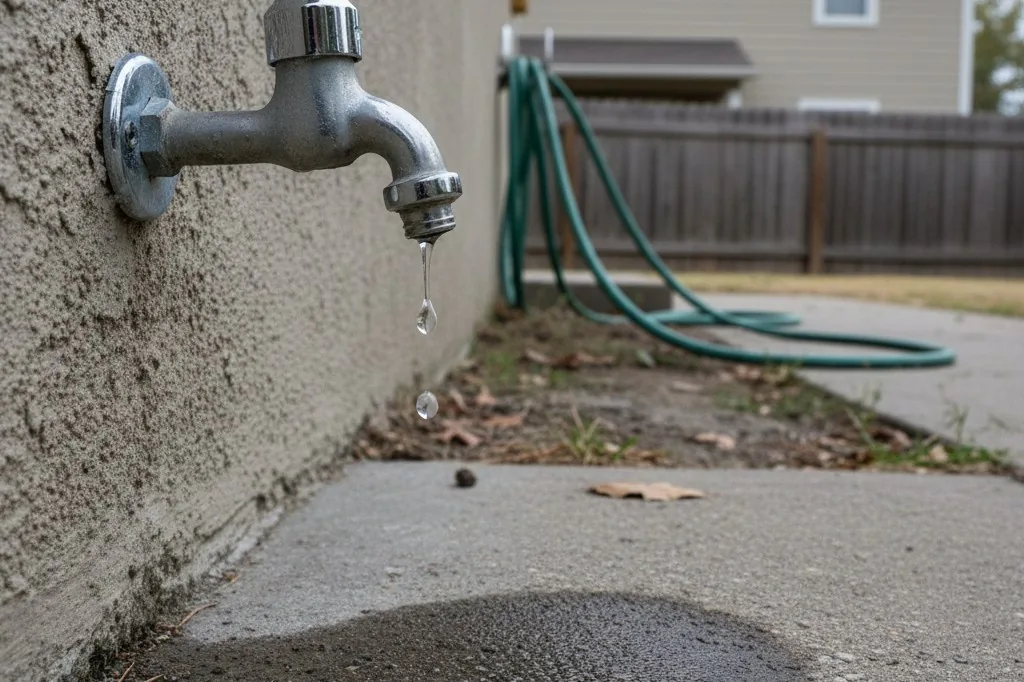

I noticed the outdoor faucet dripping sometime in November. A slow, occasional drip — nothing that seemed worth bundling up to fix in the cold.
It kept going all winter. Every time I walked past the side of the house, I’d see that little wet patch on the concrete below the spigot. I told myself I’d deal with it in spring.
March came. The weather warmed up, and I went outside to hook up the hose for the first time. I turned the handle, expecting the usual gush of water.
Instead, water sprayed sideways from where the pipe met the wall. Not a trickle — a full jet, soaking the siding and pooling at the foundation.
I shut it off from inside and took a closer look. The copper pipe had a clean split running two inches long, right behind the brick. The metal had actually torn open.
A drip shouldn’t do that. I’d assumed it was just a worn washer, maybe a loose packing nut. But something happened to that pipe over the winter — something I didn’t see coming.
The split was clean, almost surgical. The edges of the copper had peeled back like someone had taken a can opener to it. When I touched the pipe, I could feel where the metal had thinned slightly at the bend — but not enough to explain a failure like this on its own.
I checked the rest of the line where I could see it. No corrosion, no obvious damage, no signs of impact. The pipe was maybe twelve years old, installed when we added the back deck. It had been fine through every other winter.
Except I’d never let it drip like that before. Every other year, I’d either fixed a leak right away or the faucet had stayed tight until spring. This time I’d ignored it for four solid months, through January lows that hit minus fifteen more than once.
The question I kept coming back to: how does a slow drip — barely enough to wet the ground — generate the force to tear open a half-inch copper pipe?
What actually splits a solid copper line like that?