The Bare Patch in My Lawn That Wouldn't Grow Back for Two Years
The Three-Hour Fix
I cleared my Saturday morning, filled a water bottle, and grabbed a flat spade, a garden fork, and a wheelbarrow. The job took about three hours start to finish, and most of that was just moving dirt around.
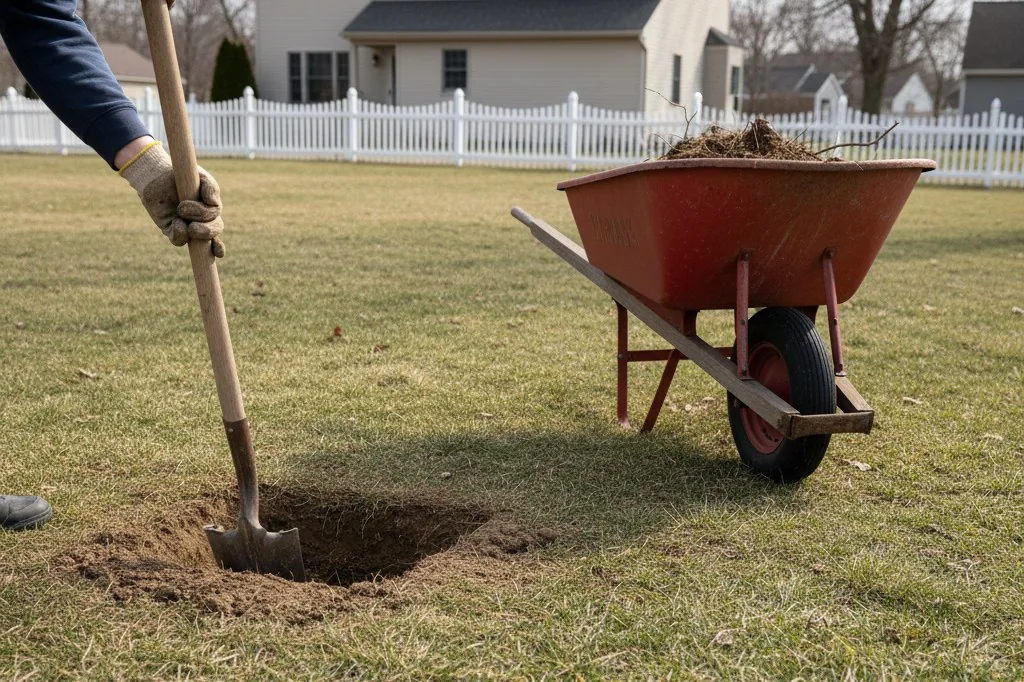
I started by marking the full circle with a piece of string and a screwdriver, so I knew where to dig. Then I went to work with the spade, cutting down eight inches deep this time—deeper than I thought I’d need, but I wanted to be sure I got below the concrete-hard layer and into soil that still had some life. The first few cuts were tough. That compacted layer didn’t want to break. I ended up using the garden fork to pry up big chunks, then shoveling them into the wheelbarrow.
Out came roughly 12 cubic feet of that dead, airless soil. I made four trips to the curb with the wheelbarrow, dumping it in a pile for the yard waste pickup. My shoulders felt it by trip three.
Once the hole was clear, I roughed up the bottom and sides with the fork, just to make sure there wasn’t a slick compacted surface left that would stop water from draining down. Then I filled it back in.
I used two 40-pound bags of topsoil from Home Depot ($4.18 each), mixed with one bag of composted cow manure ($3.97) to add some organic matter and help the new soil hold moisture without clumping up again. I dumped them in, broke up the clumps with the fork, and raked it level with the surrounding lawn. It sat maybe half an inch high, which was fine—it would settle with watering.
Then I overseeded the whole area with a 3-pound bag of Scotts sun-and-shade mix ($8.50) and scratched it in lightly with the back of the rake so the seed had contact with the soil. I added a light application of starter fertilizer ($12 for a small box, the kind with the higher middle number for root growth), watered it until the soil was damp but not puddled, and then watered lightly every morning for the next three weeks.
Total cost: about $33, plus water.
The grass came in thick within ten days. Not just a few blades—thick, the way it should’ve looked two years earlier. Two years later, you can’t tell where the bare spot was. It’s the same color, same thickness as everything around it.
When to call someone: If your bare patch is bigger than a kiddie pool, or you hit clay, hardpan, or construction debris more than a foot down, you’re looking at grading work or drainage issues—and that’s a landscaper’s job, not a Saturday project. Same if water pools on the surface after rain. That’s a bigger problem than compaction.