The Bare Patch in My Lawn That Wouldn't Grow Back for Two Years
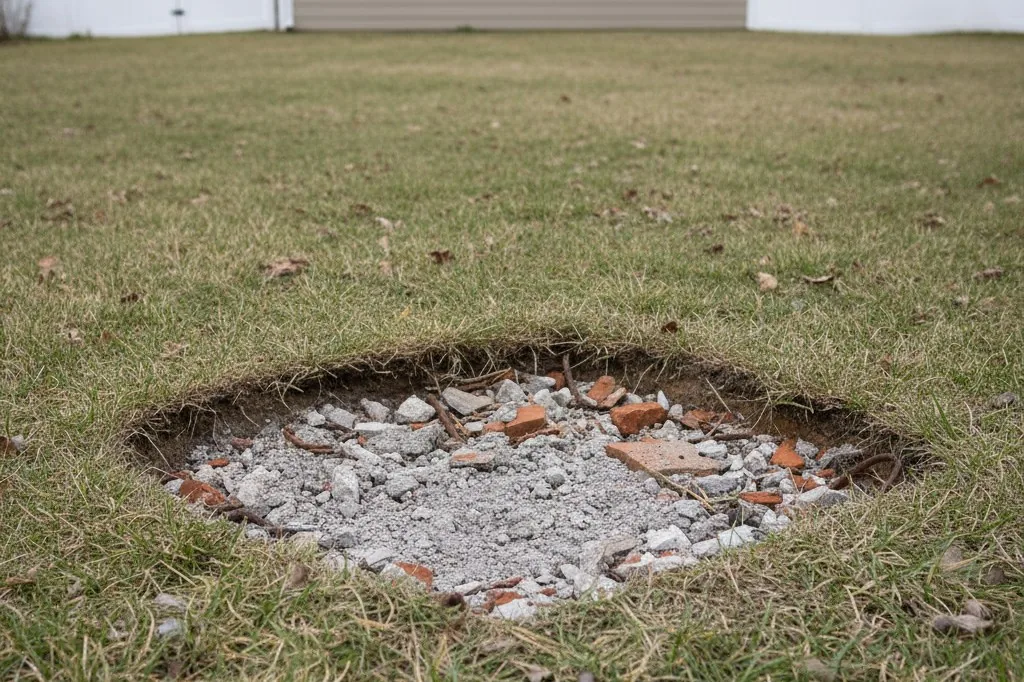
What I Found Underground
I grabbed a flat spade one Saturday morning in late May and started digging. Not just scratching the surface to drop in more seed—I went down a full six inches, lifting out a square foot of what should have been soil.
The top two inches looked normal enough. Dark brown, a little loose, the kind of texture you’d expect in a lawn that gets watered. But below that? It was like hitting pavement.
The “soil” underneath was dense, gray, and slick to the touch. When I squeezed a handful, it formed a tight ball that wouldn’t crumble even when I pressed my thumb into it. No air pockets, no worm holes, no bits of organic matter, nothing that looked like it could hold oxygen or let water drain through. I tried crumbling it between my fingers. It just smeared.
I poked the edge of the spade into the hole and hit resistance. The layer below had the consistency of wet clay, or maybe potter’s clay, completely compacted into a solid mass. It took real effort to break chunks loose.
That’s when it clicked. The pool hadn’t just blocked sunlight for three months. It had been filled with water—probably 800 gallons or more depending on how high we filled it—and all of that weight had been pressing down on wet ground, day after day, for the entire summer. We’d top it off with the hose every few days as water evaporated or splashed out. The ground underneath never had a chance to dry out or breathe.
Grass seed needs roots. Roots need air, drainage, and room to grow. They need to push through soil, not clay.
This wasn’t soil anymore. It was basically a brick. No amount of surface seed was ever going to fix that, because the roots couldn’t penetrate down past the first inch or two before hitting that compacted wall. They’d stall, dry out, and die.
I dug two more test holes in different parts of the circle. Same thing. The entire footprint of the pool had turned into a dense, oxygen-starved layer that started about two inches down and went at least six inches deep, maybe more.
Which meant I wasn’t looking at a seeding problem. I was looking at a digging problem.