Our Fireplace Filled the Living Room With Smoke Until I Checked One Thing

What Was Blocking It
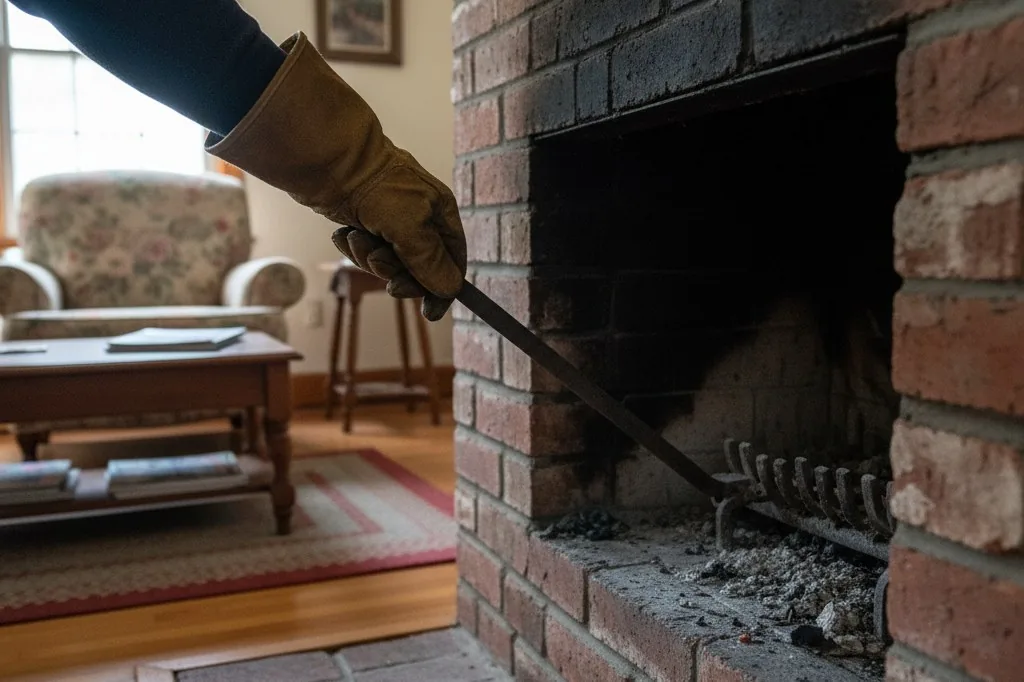
The damper handle was there, exactly where Tom said it would be—a flat metal lever about six inches long, tucked up in the throat of the firebox just past where the firebricks end.
But it wasn’t in the open position anymore. It was angled down, flush against the flue, sealing the chimney shut.
I hadn’t touched it. My wife swore she hadn’t either. So what moved it?
Tom asked if we’d had anyone else in the house recently—a cleaning service, contractors, family visiting for the holidays. Then it clicked: my brother-in-law had stayed with us the week before Thanksgiving. He’s the kind of guy who fidgets with everything, opens cabinets to see what’s inside, adjusts thermostats without asking. He must have reached up into the fireplace, found the lever, and closed it without realizing what it was. Maybe he thought it was a vent that should stay shut when the fireplace wasn’t in use.
Tom shined his flashlight up into the throat and pointed out something else: a layer of dark, flaky buildup coating the damper plate and the walls around it. Creosote and soot, he said, from two years of fires. Not dangerous yet—it wasn’t the thick, crusty, tar-like stuff that causes chimney fires—but enough that the damper wasn’t moving as smoothly as it should. The lever didn’t click into position anymore. It just sat wherever you left it.
That explained why I hadn’t noticed it was closed when I built the fire. From below, in the dim light of the firebox, the damper looked like it always did: just a dark metal shape in a dark space. I’d glanced up out of habit, saw the same shadow I always saw, and assumed everything was fine.
Looking back, the signs were obvious. The last few fires that fall had seemed harder to start, like the kindling wasn’t catching the way it used to. The logs smoldered more than they crackled. I’d blamed it on wet wood or a bad batch, but it was the airflow. The fire was suffocating.
The question now: could I fix this myself, or did I need to call someone and pay for an emergency visit on a Saturday night?