One Radiator Stayed Ice Cold While the Rest of the House Heated Perfectly

The Five-Minute Fix
I grabbed a flathead screwdriver, a pair of slip-joint pliers, and a can of PB B’laster penetrating oil from the garage. Any penetrating oil works—WD-40 will do in a pinch, though the heavier stuff is better.
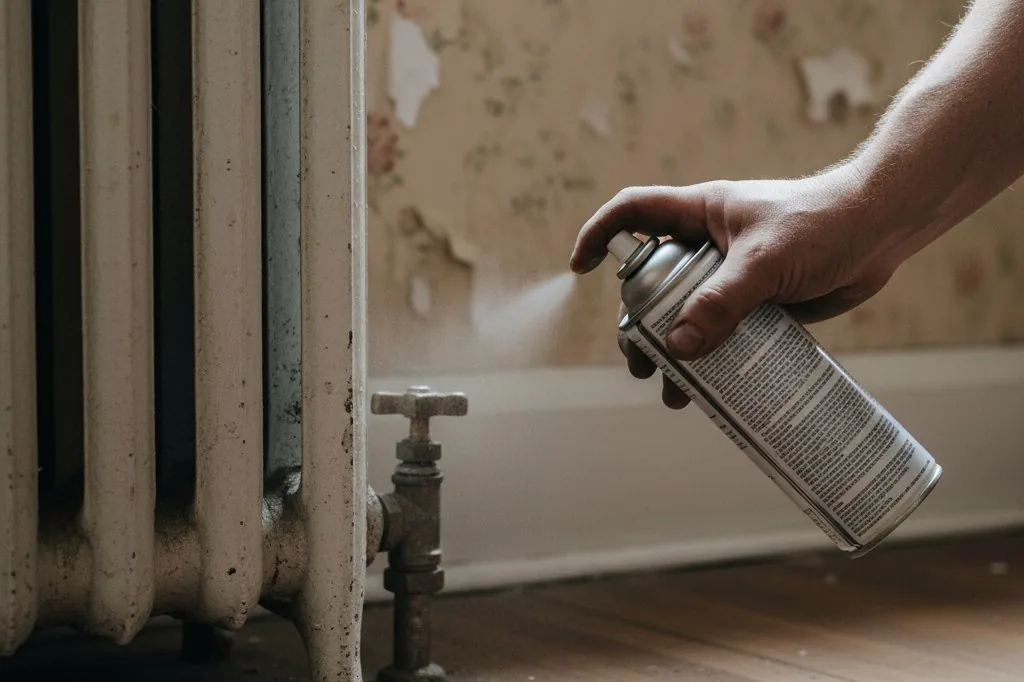
First, I soaked the exposed pin. I held the nozzle close and gave it two good sprays right where the pin meets the valve body, aiming for the tiny gap around the base. You want the oil to seep down into the sleeve where the pin is stuck, not just sit on top.
Then I waited three minutes. Not optional. I set a timer on my phone and left the room, because standing there staring at it doesn’t make the oil work faster. The solvent needs time to creep into the corrosion and break the bond. Thirty seconds won’t do it.
When I came back, I started with gentle persuasion. I placed the flat tip of the screwdriver on the top of the pin—right in the center, so I wouldn’t slip off and scratch the valve body—and tapped the handle lightly with the side of the pliers. Not hammering, just firm taps. One, two, three.
Nothing.
I gave it another spray of oil and waited another minute. Then I tried again, a little harder this time. Four taps, five. On the sixth, I felt it move. Just a hair, a tiny bit of give that hadn’t been there before.
I pressed down on the pin with my thumb, then let it go. It stayed down. I pressed again, and this time when I released it, it rose back up a millimeter. The spring inside was starting to work.
I kept going, pressing it down and releasing it, working it like a sticky button. Ten times, fifteen, twenty. Each cycle it moved a little more freely. After maybe thirty presses, it started popping back up on its own the moment I let go—smooth, quick, the way it should.
I wiped off the excess oil with a paper towel, lined up the thermostatic head, and screwed it back into place. I turned the dial to 3 and put my hand on the radiator.
Within ten minutes, I felt warmth spreading across the metal. Within twenty, the whole panel was hot.
Total cost: one can of penetrating oil, around $7 at Home Depot or Lowe’s. I already had the screwdriver and pliers.
Time: maybe fifteen minutes, including the waiting.
One thing worth knowing: if the pin won’t budge after soaking and tapping, or if you see water weeping from the valve body when you press the pin, stop. That means the valve seat is damaged or the internal seal has failed, and you’re looking at a valve replacement. That’s a job for a plumber, because it involves draining at least part of the system, shutting off the supply, and cutting or unscrewing pipes. For a single valve, expect to pay $150 to $300 depending on your area.
But most of the time? It’s just a stuck pin. And a stuck pin is something you can fix yourself before breakfast.