Half My Hedge Turned Brown Overnight—and the Cause Was Right Under My Feet
The Fix and the Cost
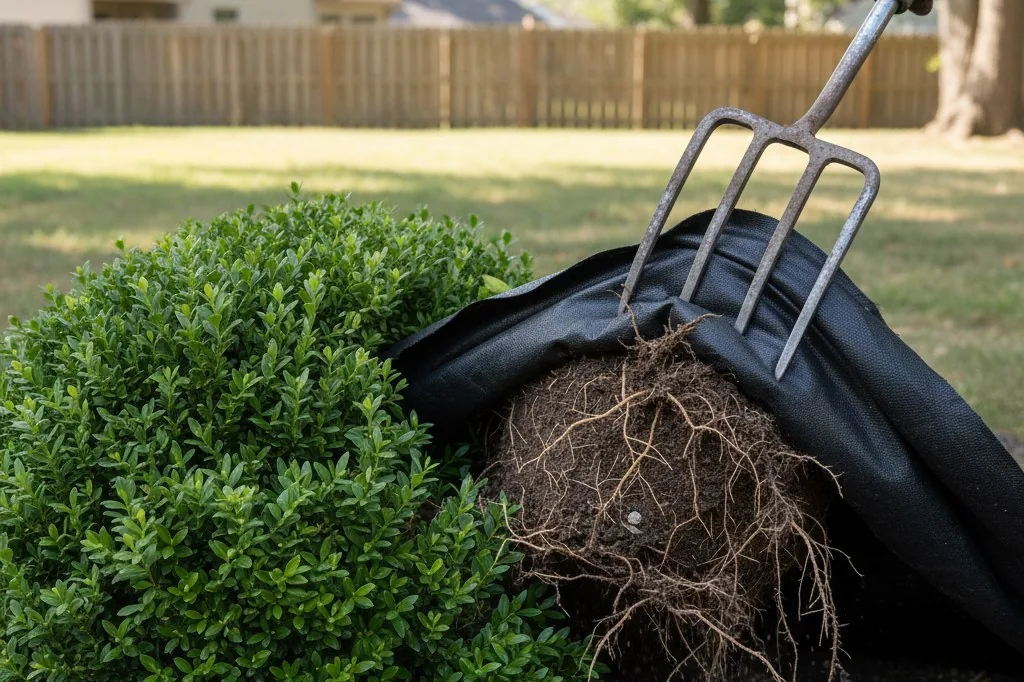
I started at one end and worked slowly, pulling back soil with a garden fork instead of a shovel. A fork lets you lift and loosen without slicing through roots the way a sharp spade will. Every six inches I’d lift the fabric carefully, checking for live roots underneath.
Most were brittle and gray—dead on contact, snapping when I touched them. But some, especially closer to the green side where the fabric edge had been, still had white tips. Those are active roots, still trying to grow. That was enough to keep going.
Once I’d cleared a three-foot section, I’d pull the fabric out from under it, rolling it as I went and snipping the staples with wire cutters. It took about ninety minutes to remove the entire twenty-foot run. Slow, hot work, and I had to stop twice to drink water and let my lower back recover.
Once the fabric was out, I loosened the compacted soil layer with the fork, working down about eight inches and breaking up the hard pan that had formed on top of the old barrier. Then I worked in about two cubic feet of compost I already had on hand—nothing fancy, just bagged stuff from Home Depot I’d bought earlier that season for the vegetable beds.
Then I watered. Deeply. I let the hose run at the base of the first plant for twenty minutes, moved it three feet down the line, and repeated until I’d covered the whole damaged section. I wanted the water to soak down a foot or more, not just wet the top two inches.
I did that twice a week for eight weeks, every Wednesday and Sunday morning. I’d set a timer on my phone so I wouldn’t forget and leave the hose running into the neighbor’s yard.
By week four, I saw green buds on two of the brown stems. Tiny, but unmistakable. By week eight, about 70% of the damaged side had leafed out again—not full and dense like the green side, but alive. Three plants at the far end never came back, and I replaced those in late September with boxwoods from Lowe’s at $18 each.
Total cost: $54 for replacement plants, plus the compost I already owned. Time investment: maybe four hours of digging spread across one weekend, and eight weeks of patience.
If your hedge doesn’t show new growth by week six, or if the root damage runs deeper than a foot, call a landscaper. Some things are too far gone, and you’ll save money replacing early rather than watering dead wood all summer.