Half My Hedge Turned Brown Overnight—and the Cause Was Right Under My Feet
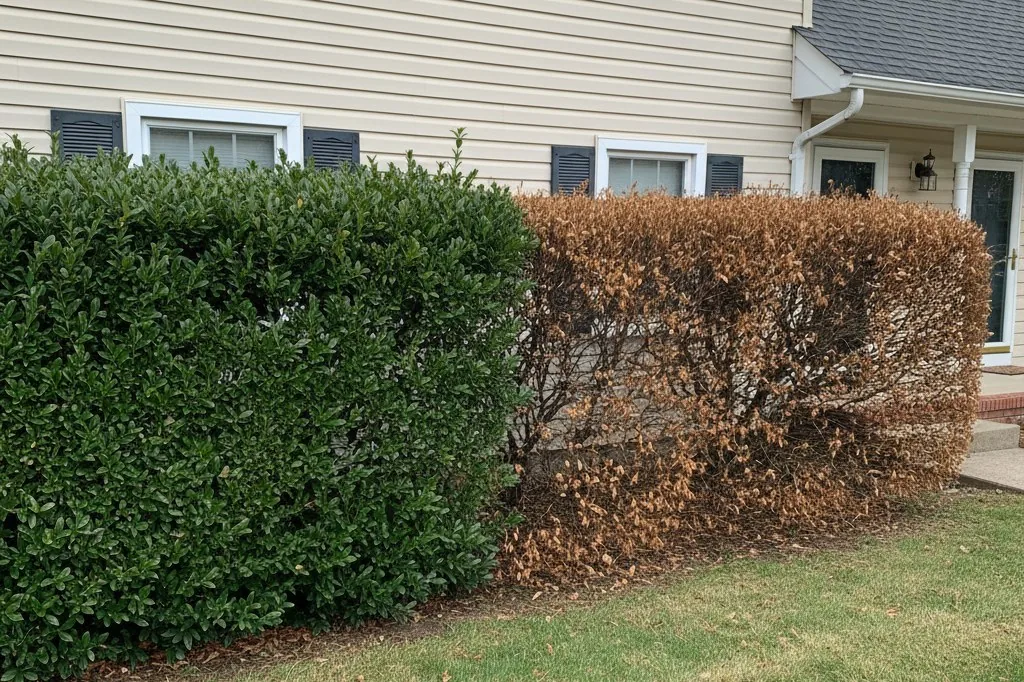
I walked out one June morning and half my boxwood hedge looked like it had been torched overnight.
The left side was green and glossy, exactly as it had been the day before. The right side—twelve feet of it—had turned a dull, papery brown. Not a gradual fade. Not a few branches here and there. A hard line, as if someone had drawn it with a ruler.
I’d watered the whole hedge the same way. Same sun, same soil, same plants from the same nursery eighteen months earlier. There’d been no frost, no dogs, no chemical spills I could remember. I checked for hose kinks, sprinkler coverage, anything that might explain why water would suddenly stop reaching one section.
Nothing.
But something had clearly changed, and it had changed fast.
You expect a plant to decline evenly if it’s sick—bug damage on new growth, fungus creeping from one end, maybe drought stress hitting the sunniest spots first. You don’t expect a perfectly vertical split, green on one side and dead on the other, like two different time zones.
I pressed my thumb into the brown foliage. Brittle. Completely dry. When I snapped a twig, it broke clean with no green cambium underneath. That’s usually a bad sign, but the brown section wasn’t uniform—some stems near the dividing line still had a little flex to them, which meant maybe, possibly, they weren’t completely gone.
I pulled back the mulch along the base of the hedge. The soil on the green side felt cool and slightly damp two inches down, the way it should after a watering the night before. On the brown side? Dust. Loose, gray, and completely dry, as if I hadn’t run the hose there at all.
But I had. I’d stood right there and watched the water spread across the mulch.
So where had it gone?
I grabbed a spade and started digging where the green stopped and the brown began, right along that razor-sharp line. If something was blocking the water, it had to be underground.